
Introduction
Were you aware that your breath is able to have an impact on your blood pressure? Yes, really! You can use deep breathing practices for a few minutes a day to relax your body, lower stress, and improve your heart health. Here we’ll discuss 7 truths to lower blood pressure with breathing exercises.
High blood pressure (hypertension) is a condition that many people may not be aware of due to a busy lifestyle. All of these factors- working for long hours, stress, inadequate sleep, and bad habits are in count as a cause of hypertension. This causes stress for your heart over time, and it impacts your health. This is why people are now seeking to reduce blood pressure without using medication, and breathing exercises are one of the most popular and effective methods to achieve this.
Slow breathing or mindful breathing activates the process of relaxation in the body(2). This will help to reduce cortisol levels, relax blood vessels, and enhance blood flow. Practicing simple exercises such as diaphragmatic breathing (belly breathing) or calming breathing exercises can have an impact on how your body copes with stress and keeps your blood pressure at a healthy level(1).
The best part? There is no need to have any equipment, gym membership, or special training. These easy breathing exercises at home can be done anytime, anywhere. Whether it’s stress of the day, anxiety, or natural hypertension treatments, you will find breathing the right way a game-changer.
In this article, we’ll examine the 7 truths to reduce blood pressure using breathing techniques, and you can manage your health in an easy, natural, and effective manner. One deep breath is the first step to better blood pressure control and a more peaceful mind!
Truth #1 – Deep Breathing Activates the Relaxation Response
One of the most significant advantages and the number one out of 7 truths to lower blood pressure with breathing exercises is that exercises can quickly soothe both your body and mind. Slow and deep breathing puts your body in the relaxation response. This is in contrast to the stress mode your body turns into in times of anxiety or pressure, and it is an important component in reducing blood pressure naturally(2)(5).
For most people in everyday life, there is a constant state of stress. This keeps the body in the “fight or flight” state, increases the heart rate, narrows blood vessels, and raises blood pressure. This can lead to high blood pressure and other heart problems over time. Once you begin to practice slow breathing, however, your body begins to relax.
This is because deep breathing triggers the parasympathetic nervous system, which is the part of your nervous system that communicates to it that it can relax. Your heart rate stabilizes, your muscles relax, and your blood vessels start to open. This means that your body will have improved blood circulation and better heart health without having to take any medications. Knowing about the 7 truths to lower blood pressure with breathing exercises is very important to help your body maintain normal blood pressure.
Oxygen is another factor that is vital in this process. Diaphragmatic breathing (belly breathing) allows you to breathe deeper, which increases the amount of oxygen you are getting. This increased oxygen supply enables your organs to work more efficiently and puts less pressure on your heart. A straightforward and effective method of promoting a natural regulation of blood pressure.
There’s also a strong connection between stress and high blood pressure(6). Chronically high blood pressure can be caused by constantly high levels of stress hormones such as cortisol. After knowing about the 7 truths to lower blood pressure with breathing exercises, regularly practicing calming breathing exercises helps to reduce these stress hormones and restore balance to your body. With time, this can help to improve hypertension and overall health.
Truth #2 – Slow Breathing Helps Regulate Heart Rate
Second out of 7 truths to lower blood pressure with breathing exercises is that your breathing and your heart are closely related, so breathing helps to regulate your heart rate. Slow breathing promotes a more balanced and steady heartbeat. This goes a long way in helping to naturally reduce blood pressure and improve heart health(1)(5).
The Rhythm of Breathing and Heart Rate
Not all the time your heart beats at the same rate, and this is a good thing. This is a natural fluctuation known as heart rate variability, which is an indication of your body’s ability to respond to stress and relaxation.
Slow and conscious breathing helps to synchronize your heart rate with your breath. On the inhale, your heart rate goes up slightly, and on the exhale, it slows down. This calming beat promotes relaxation and healthy blood pressure(2)(3)(4).

Truth #3 – Consistency Matters More Than Duration
As for breathing exercises and blood pressure, there’s one very important point: It’s consistency, not duration. Many people think that it takes a lot of time to start to get the benefits of deep breathing exercises, and that isn’t actually the case. The most important thing is to show up every day, even if it’s just for a few minutes. One of the 7 truths to lower blood pressure with breathing exercises is consistency.
Why is Daily Practice So Effective?
You like a routine. After frequenting mindful breathing, your nervous system slowly becomes accustomed to staying calm, even when taking part in a tense scenario. This will enhance the natural regulation of your blood pressure. As you continue, you will find that your body is more balanced and that you aren’t feeling as stressed or out-of-control.
The other way around, however, occasionally doing breathing exercises could help you for a while but that’s not the permanent solution. This is why it is critical that you are consistent with your hypertension management.
Making It a Simple Habit
As we know, it is one of the 7 truths to lower blood pressure with breathing exercises, so it is important to follow it. Calming breathing can be used in the morning to create a peaceful start to your day, or at night to relax your body before you sleep. You can even employ them when your mind is stressed to calm down.
When breathing is a habit, it’s not work. Rather, it becomes a healthy and useful routine for your health.
Truth #4 – Diaphragmatic Breathing is More Effective
Another fact out of 7 truths to lower blood pressure with breathing exercises is that the diaphragmatic breathing exercise is most beneficial out of all other exercises. You can breathe simply by using the diaphragm rather than just the chest by practicing diaphragmatic breathing or belly breathing. Your diaphragm is a huge muscle beneath your lungs that enables you to breathe deeply and fully. With this breathing technique, your abdomen will swell on inhalation and will recoil on exhalation. This kind of breathing is usually employed in breathing workouts for high blood pressure because it naturally promotes relaxation and aids the health of the heart.
How It Aids In Oxygen Exchange And Lessens Tension
This breathing technique has an advantage in that it promotes oxygen exchange. Deep breathing allows more oxygen to enter your lungs and removes more carbon dioxide from them. This will improve the way your body works and help keep you healthy.
So, this is another fact out of 7 truths to lower blood pressure with breathing exercises: this kind of relaxation breathing technique calms the mind and can ease muscle tension and diminish stress hormones such as cortisol. This helps your body and your heart to relax, thus lowering your blood pressure naturally and keeping it steady(2).
Diaphragmatic breathing, in simple terms, is a habit that is so easy but so powerful at helping your body relax, allows more oxygen to flow, and is one of the best ways to keep your blood pressure naturally within a healthy range.

Truth #5 – Stress Reduction is the Key Mechanism
The key to the effectiveness of breathing techniques and another fact out of 7 truths to lower blood pressure with breathing exercises is to reduce stress. Mostly, hypertension is not caused only by diet or genetic factors; rather, it is correlated with how stressed your body and mind are on a daily basis. Good sleep helps to reduce stress level of a person, but breathing exercises work best.
How Breathing In And Breathing Out Can Help Lower Stress Naturally
We’re discussing the 7 truths to lower blood pressure with breathing exercises; hence, breathing exercises are very powerful. Slow breathing signals the brain that it is safe. The nervous system then turns from “stress” to “relaxation” mode, or the “parasympathetic” nervous system.
During this transition, your heart rate reduces, your muscles relax, and your blood vessels dilate. This helps to improve control of blood pressure and to bring your body back into a state of calm and balance.
Effective Ways to Break The Cycle Of Stress–Blood Pressure
A vicious cycle can form between stress and high blood pressure. High blood pressure will increase stress and higher stress will result in higher blood pressure and it may further cause cardiovascular diseases. Breathing exercises are helpful in breaking this cycle as they are calming not just the mind but the body as well(6).
Mindful breathing is a practice that, with regular use, begins to bring you under control when faced with stressful situations. Rather than tensing up in response, your body becomes accustomed to relaxation – an important component of dealing with hypertension the natural way.

Truth #6 – Breathing Exercises Can Be Used With Medications
However, there is one crucial fact out of 7 truths to lower blood pressure with breathing exercises is that many people may not know, and that is the breathing exercises for blood pressure shouldn’t be used as a replacement for medical treatment. But they’re best used as an adjunctive behavior to use along with your regular blood pressure treatment and plan.
Breathing Exercises Are Supportive And Not A Replacement
Medications are frequently prescribed for people who have been diagnosed with high blood pressure (hypertension) to help control their blood pressure. These medications are necessary and should not be discontinued without consulting a physician. Meanwhile, incorporating deep breathing exercises with diet and medications will enhance the outcomes in a natural way, helping to support the body(1).
Consider breathing exercises to be another form of assistance for the heart. They can help to soothe the nervous system, lower stress levels and balance the internal condition, complementing your treatment plan.
How Breathing Supports Medical Treatment
Slow breathing techniques can help keep the body free of stress if done regularly. This helps reduce the amount of stress hormones, such as cortisol, which have been associated with higher blood pressure numbers. With reduced stress, the heart does not need to work as strenuously, and this can help in controlling blood pressure over time.
Coping with stress is another benefit and one fact out of 7 truths to lower blood pressure with breathing exercises that many observe when using calming breathing exercises to relax, to sleep and to decrease stress and anxiety. Such changes can help the body be more responsive to medications and other treatments.
Truth #7 – Results Improve with Mindfulness Techniques
One of the most important understandings and one fact out of 7 truths to lower blood pressure with breathing exercises is that they are even more effective when used in conjunction with mindfulness. Breathing exercises are beneficial but when added to the practice of awareness and focus, then the benefit in blood pressure control and heart health is even greater.
Understanding The Concept Of Mindfulness
Mindfulness is just the awareness of living in the here and now, without your mind wandering elsewhere. When you do this in conjunction with deep breathing, you are not only breathing, you are fully aware of every inhale and every exhale. This helps to bring down the mind and relax the body on a deeper level.
Mindful breathing helps the body to react in a balanced manner. The nervous system moves to relax, heart rate stabilizes and blood vessels relax more easily. This helps to maintain healthy blood pressure and to shift the body out of “stress mode.”
Simple Ways to Practice Being Mindful Through Your Breath
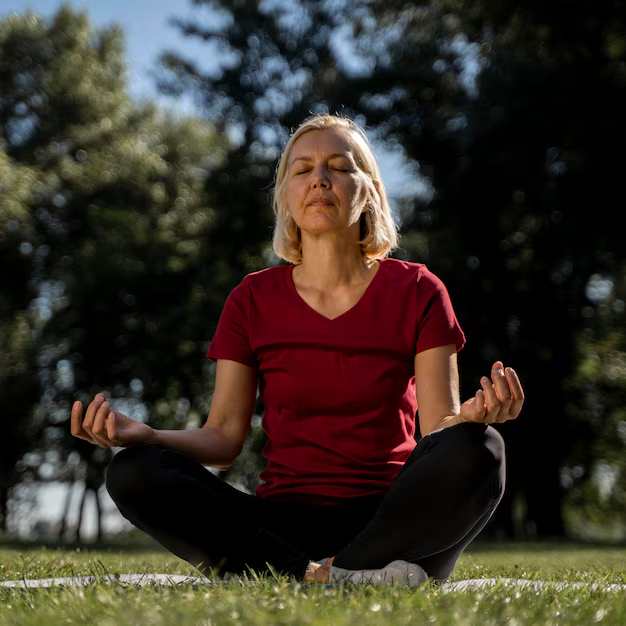
You’ll only get the benefits of knowing these 7 truths to lower blood pressure with breathing exercises when you follow the rules of these exercises. Simply sit in silence, close your eyes, and concentrate on your breath. Notice that the air comes in and goes out through the nose. Bring your mind back to your breath if you start to wander, but without judgment. It’s a simple practice of mindful breathing which can be done anytime and anywhere.
Just a few minutes of this each day can help reduce blood pressure naturally, aid concentration, and relax the entire body.
Conclusion
The 7 truths to lower blood pressure with breathing exercises reveal a very simple, but powerful principle: Your breath can actually affect your health. Not all treatments or solutions are complex and costly to maintain heart health. Sometimes the best change begins with as simple a thing as breathing.
We explored how deep breathing exercises, slow breathing, and diaphragmatic breathing (belly breathing) can help to soothe the nervous system, lower stress and help to regulate blood pressure throughout this guide. We also discovered that one of the largest underlying causes of high blood pressure (hypertension) is stress, and when you can manage stress through the calming breathing exercises, the body naturally moves towards balance.
Consistency is the key reminder, and one of the 7 truths to lower blood pressure with breathing exercises. Just a few minutes of mindfulness breathing daily can slowly help to regulate circulation, reduce stress hormones, and aid in long-term natural hypertension management. It’s not about doing it well; the only thing is doing it consistently, gently.
Over time, your body reacts better when performing breathing exercises in combination with awareness and a calm mind. Some people report better sleep, decreased anxiety, and a more balanced mood. All the little changes make a healthy life(1).
Ultimately, you’re always breathing. Treat it with care, practice it every day and let these simple natural methods for reducing blood pressure help you on your journey to better health and a more relaxed lifestyle.
Frequently Asked Questions (FAQs)
Q1. Are breathing exercises effective in the treatment of hypertension?
Absolutely, we’ve discussed 7 truths to lower blood pressure with breathing exercises; it can help to control blood pressure naturally. Slow and relaxed breathing helps calm the nervous system, decreases stress hormones, and increases circulation, and can help lower high blood pressure (hypertension) over time.
Q2. How many minutes of breathing exercises a day?
You don’t have to be sitting for a long time. Even practicing 5 to 10 minutes of slow breathing daily can have these same beneficial effects on the heart and reduce stress. Consistency is more important than length of time.
Q3. Which breathing exercise is best for high blood pressure?
The following are some of the best breathing techniques available to use: diaphragmatic breathing (also known as belly breathing), 4-7-8 breathing, and resonance breathing. These are relaxing breathing exercises that aid the body in relaxing and better managing natural hypertension as we’ve known the 7 truths to lower blood pressure with breathing exercises in this article.
Q4. Is diaphragmatic breathing better than normal breathing?
Yes, in this article on knowing 7 truths to lower blood pressure with breathing exercises, we’ve seen that diaphragmatic breathing will give you more oxygen and better relaxation than shallow chest breathing. It helps improve blood flow, reduces stress, and improves blood pressure. We’ve also discussed the benefits and 7 truths to lower blood pressure with breathing exercises; you can check them.
Q5. Does stress really make high blood pressure worse?
Yes, according to research and our article on the 7 truths to lower blood pressure with breathing exercises, there is a correlation between stress and hypertension. When the stress is chronic, the hormones cortisol and adrenaline are elevated and can constrict blood vessels and raise blood pressure. This is one of the reasons why relaxation techniques for reducing stress are so beneficial.
Q6. Can breathing exercises ease anxiety as well?
Yes, one fact out of 7 truths to lower blood pressure with breathing exercises is that deep breathing exercises are great for easing anxiety and mental stress. They have a sedative and soothing effect on the nervous system, relax the body and promote emotional health and proper blood pressure regulation.
References
- https://link.springer.com/article/10.1186/s12889-025-22139-y
- https://thehealerjournal.com/index.php/templates/article/view/388
- https://www.e3s-conferences.org/articles/e3sconf/abs/2025/09/e3sconf_icma-sure2024_04010/e3sconf_icma-sure2024_04010.html
- https://brieflands.com/journals/asjsm/articles/158088
- https://e-jurnal.iphorr.com/index.php/minh/article/view/964
- https://www.mdpi.com/2411-5142/10/1/21
Discover more from Health And Nutrition
Subscribe to get the latest posts sent to your email.

